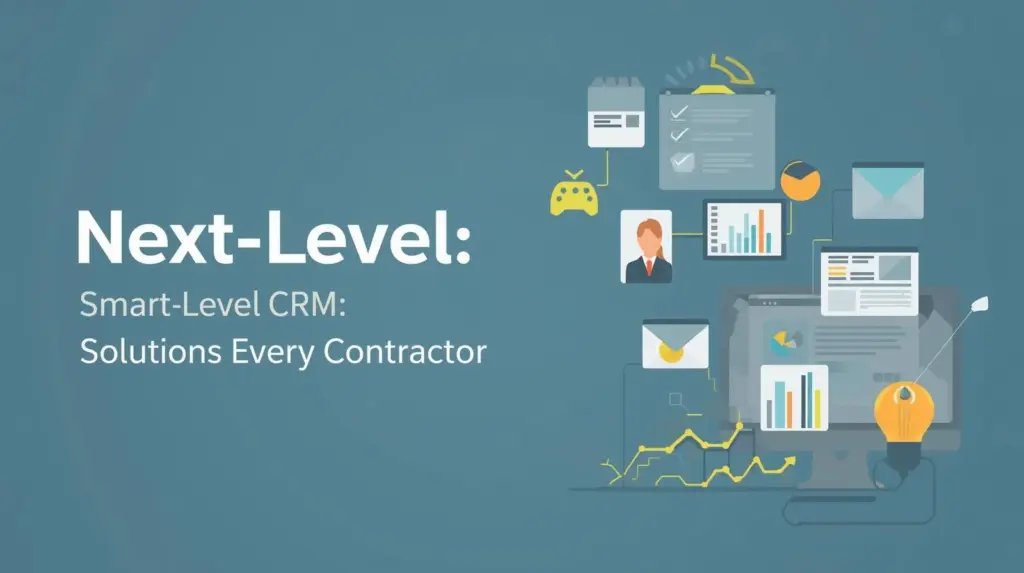
Next-Level CRM: Smart Solutions Every Contractor Needs
Running a contracting business means juggling clients, quotes, invoices, deadlines, crews, and job sites all at once. It can feel like total chaos. That’s exactly why a solid CRM (Customer Relationship Management) system exists: it becomes your digital headquarters, bringing everything under control. Whether you’re a one-truck roofing outfit or a multi-crew general contractor, a good CRM keeps every detail from falling through the cracks. Happier clients + more productive teams = a business that actually grows without burning you out.
What is a CRM, really?
At its core, CRM software is your super-organized digital assistant. It stores contact info, logs every call/email/text, tracks payments, reminds you of follow-ups, and connects your entire workflow—from the first “Hey, can you give me a quote?” to the final paid invoice. For contractors, it’s not just a fancy address book. It ties leads, jobs, scheduling, billing, and communication into one place so you waste less time on admin and make more money with less stress.
Why contractors need CRM more than most businesses
Office jobs and online stores usually deal with one client at a time. Contractors? You’re managing 5–15 active jobs, scattered crews, surprise weather delays, material runs, change orders, and homeowners who want updates yesterday. A CRM shines here because it:
- Stops leads from disappearing into thin air
- Keeps your calendar from turning into a war zone
- Gives your crew real-time updates from the field
- Cuts way down on “I forgot to send the quote” mistakes
Contractors who use CRM properly close more deals, respond faster, keep clients calmer, and take on bigger workloads without everything exploding.
The biggest wins you get from using CRM
- Save hours every week on repetitive tasks
- Almost zero manual double-entry
- Better cash flow from faster invoicing and fewer late payments
- Higher close rates because no hot lead gets forgotten
- Happier clients = more referrals and repeat business
- Data you can actually use to spot what’s working (and what’s bleeding money)
Must-have features for any contractor CRM
The right system should feel built for the trades, not repackaged office software. Look for:
- Lead capture + visual sales pipeline
- Job scheduling & crew assignment
- Project tracking with photo uploads & notes from the field
- Instant professional quotes & e-signatures
- Automated invoicing + payment reminders
- Full mobile app (iOS & Android)
- Document storage (plans, permits, change orders)
- QuickBooks / Xero integration
- SMS/email/WhatsApp communication logs
Lead & pipeline management
Every phone call, website form, or Facebook message is potential money. A good CRM grabs those leads automatically, tags where they came from, and moves them through clear stages: New → Contacted → Quoted → Scheduled → In Progress → Paid. The drag-and-drop pipeline lets you see at a glance which jobs need attention today—so you focus on the $20k opportunities instead of chasing $500 tire-kickers.
Scheduling & project flow that actually works
Double-booking a site visit or forgetting to order shingles kills profit fast. Modern contractor CRMs let you:
- Build drag-and-drop calendars
- Assign tasks to specific crew members
- Get instant field updates (status change, photos, material usage)
- Avoid gaps in the schedule that waste labor hours
Everyone sees the same live information—office, foremen, and subcontractors—so miscommunication drops dramatically.
Quotes, invoices, and getting paid faster
Stop handwriting estimates or fighting with Word templates. With the right CRM you:
- Create branded, professional quotes in seconds
- Send them instantly via email/text
- Get read/received/signed notifications
- Convert approved quotes to jobs automatically
- Generate progress invoices with one click
- Send friendly payment reminders
- Sync everything to QuickBooks or Xero
Result: cleaner books, faster payments, happier accountants.
Mobile access = game changer for field work
You’re not chained to a desk. A real contractor CRM gives your phone full power:
- Pull up client history on the driveway
- Snap progress photos and attach notes
- Mark tasks complete from the roof
- Check tomorrow’s schedule while driving between jobs
Office and field stay perfectly synced—no more “I didn’t get that update” excuses.
Popular CRMs contractors actually love in 2026
- HubSpot CRM — Free starter plan, super easy, great for small shops focused on lead follow-up and email marketing.
- JobNimbus — Built from the ground up for roofing, siding, gutters, solar, restoration—very strong all-in-one for trades.
- Buildertrend — The heavyweight choice for larger residential builders and remodelers who need client portals, budgets, selections, and deep QuickBooks sync.
- Pipedrive — Sales-first CRM with beautiful visual pipelines—perfect if closing new work is your #1 bottleneck.
Integrations that multiply your CRM’s power
The magic happens when your CRM talks to your other tools:
- QuickBooks / Xero → auto-sync invoices & payments
- Mailchimp / ActiveCampaign → automated marketing drips
- Google Calendar / Outlook → two-way sync
- Twilio / other SMS → text reminders & updates
- Zapier → connect almost anything else
How to pick the right one (without wasting money)
- Write down your 3–5 biggest daily pains (lost leads? invoicing delays? crew confusion?)
- Make a shortlist of 2–4 CRMs that solve those pains
- Do free trials—actually use them for a week with real jobs
- Ask: Is my whole team willing to learn and use this daily?
- Start small—don’t try to boil the ocean on day one
Biggest mistakes contractors still make
- Buy it, set it up once, then never touch it again
- Let it become a dumping ground for random notes → digital junk drawer
- Skip proper team training → everyone hates it
- Expect miracles without consistent daily usage
What’s coming next (2026 and beyond)
AI is already creeping in: predictive scheduling, auto-pricing suggestions based on material costs + local demand, smart follow-up timing, even spotting potential change-order red flags early. Contractors who adopt intelligent CRMs now will lap the competition in efficiency, margins, and client satisfaction over the next 3–5 years.
Bottom line
CRM isn’t about fancy dashboards—it’s about building stronger relationships and running a smoother, more profitable operation. Every happy client you keep organized today turns into tomorrow’s referral, review, or repeat job. In an industry where reputation is everything, that’s the real competitive edge.